I love how Feininger can range from straight line compositions to black and soft water colour paintings, or even cartoon designs! Personally, I prefer his straight line near-abstraction paintings because even though they can resemble to some real-life things, we can never know the actual meaning of them!
Feininger's 'Harbor Mole'
However, I liked much more the work of Paul Klee. Each of his paintings seems to me a masterpiece. The choice of the figures and the colours used are marvellous; everything just fits in the place! Of course, my favourite must be 'Cat and Bird' (otherwise, my cats will abandon me).
I was listening to Queen's masterpiece 'Bohemian Rhapsody' while writing about Expressionism, and I just realized that this song is quite Expressionist itself! Both the lyrics and the melody transmit so many emotions that can depress and excite anyone at the same time! Certainly, Queen is not a contemporary of any of the real Expressionist, and I may be wrong, but I really think that 'Bohemian Rhapsody' -as well as 'I Want to Break Free'- is a great example of Expressionism in music.
Kokoschka's paintings are not only grotesque and disturbing, somehow I found them really entertaining because you what to look at each inch of the piece to discover each element of the painting. At first glance, they may look as a messy compilation of nonsense figures, but if you look carefully into each of the paintings, you can find characters and objects that you didn't see before and give a whole new sense to the whole composition.
Kokoschka's 'Loreley'
For example, while seeing 'Loreley' at a first and quick glance, you see a worried person in the sea... not that amazing at all. But if you keep looking at the details of the painting you will discover some other men struggling in the water, a sinking boat, a sort of lighthouse, some fire... and an octopus carrying a trident! These elements, specially the last one change your whole view and definition of the painting and you can even start imagining a story for it!
I think painting and drawing get really interesting when it comes to Expressionism. Expressionist painters usually don't have anything to do with one another if we're talking about the techniques, materials, and the subject-matters they use (although it seems they all like to make self-portraits). Moreover, sometimes even one single Expressionist artists' different works have no relation at all! (Unlike other painters that stick to the same style and technique their whole career -Monet, T.M.W. Turner, Morandi, etc.) However, the results are fantastic! Expressionists' works can be thrilling, alarming, disturbing, scary, depressing, dismal, blissful, or even carefree.
Corinth's portraits, for example, are somehow disturbing; he paints and draws himself as either a deformed and crazy-like person or as the death's pray.
Corinth's self-portrait
Corinth's self-portrait
Modersohn-Becker's protraits are much more happy and carefree. She seems to have a happy life, she's a satisfied smiling person!
Modersohn-Becker's portrait
Kollwitz's portrait, on the other hand, is quite much more severe and serious. She looks like an old woman that has pretty much figure out life. She looks like a tired, yet powerful woman. She sort of remind me to Cabaret's Fräulein Schneider/Kost when she's singing the unforgettable song 'So What?'.
Kollwitz's drawings and sculptures are really impressive and REALLY disturbing; they perfectly fit the word 'sublime'
Kollwitz's protrait
(Sara Kestelman as Fräulein Schneider in the 1993 London Revival of Cabaret
-with Alan Cumming as the Emcee-) (One of my favourite revivals)
Meidner's paintings are really social and political, and thus they are kind of alarming, specially when we're seeing those wounded people on 'Revolution' or that city falling down in 'Burning city'.
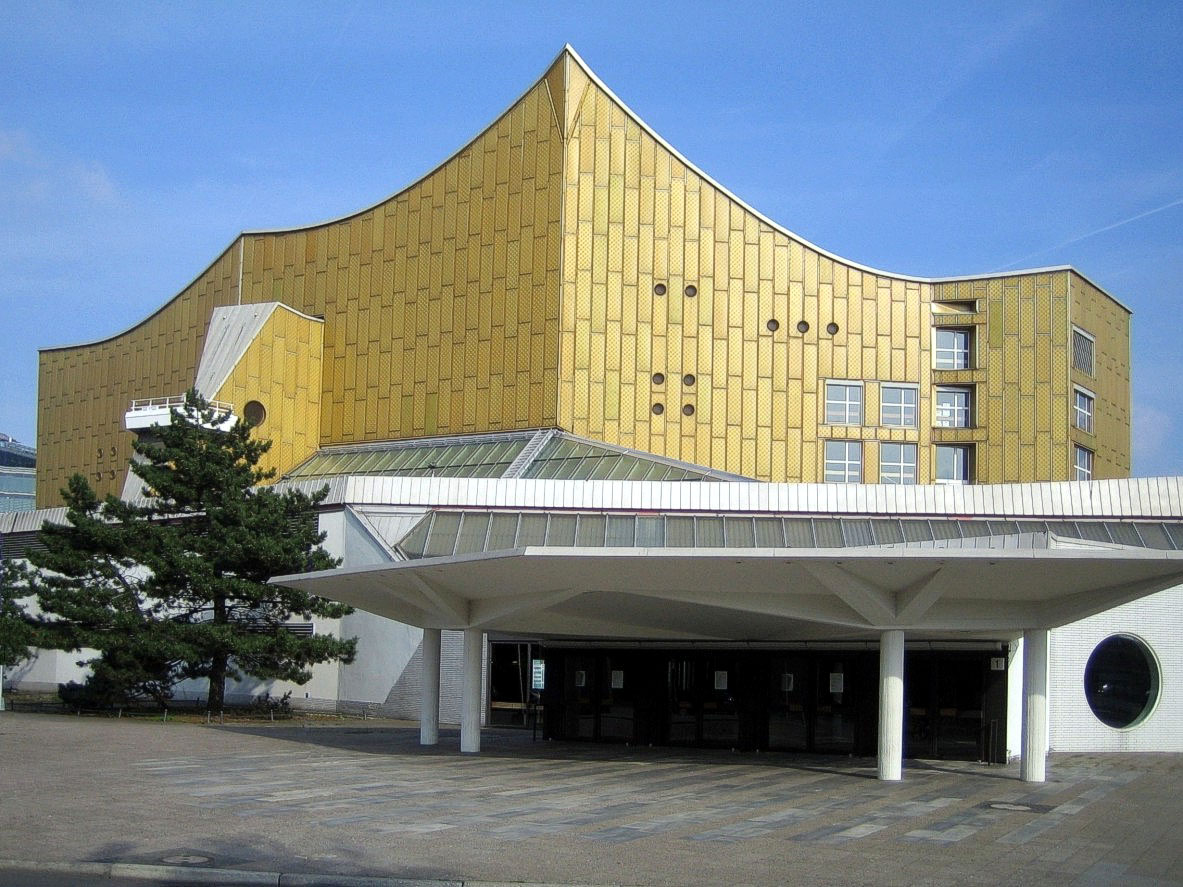
Unfortunately, I have to say to I think I didn't understand Expressionist Architecture; it simply didn't speak to me. I saw all the buildings, glass works and designs and they don't seem to be expressing anything to me. In fact, Art Nouveau expresses and transmits emotions way more than any of these Expressionist designs. For instance, I think Gaudí's Sagrada Familia is is the most Expressionist and touching piece of architecture I've ever seen in real life or in photographs. Nevertheless, this doesn't means I didn't like any of the Expressionist buildings. These are the ones I enjoyed the most:
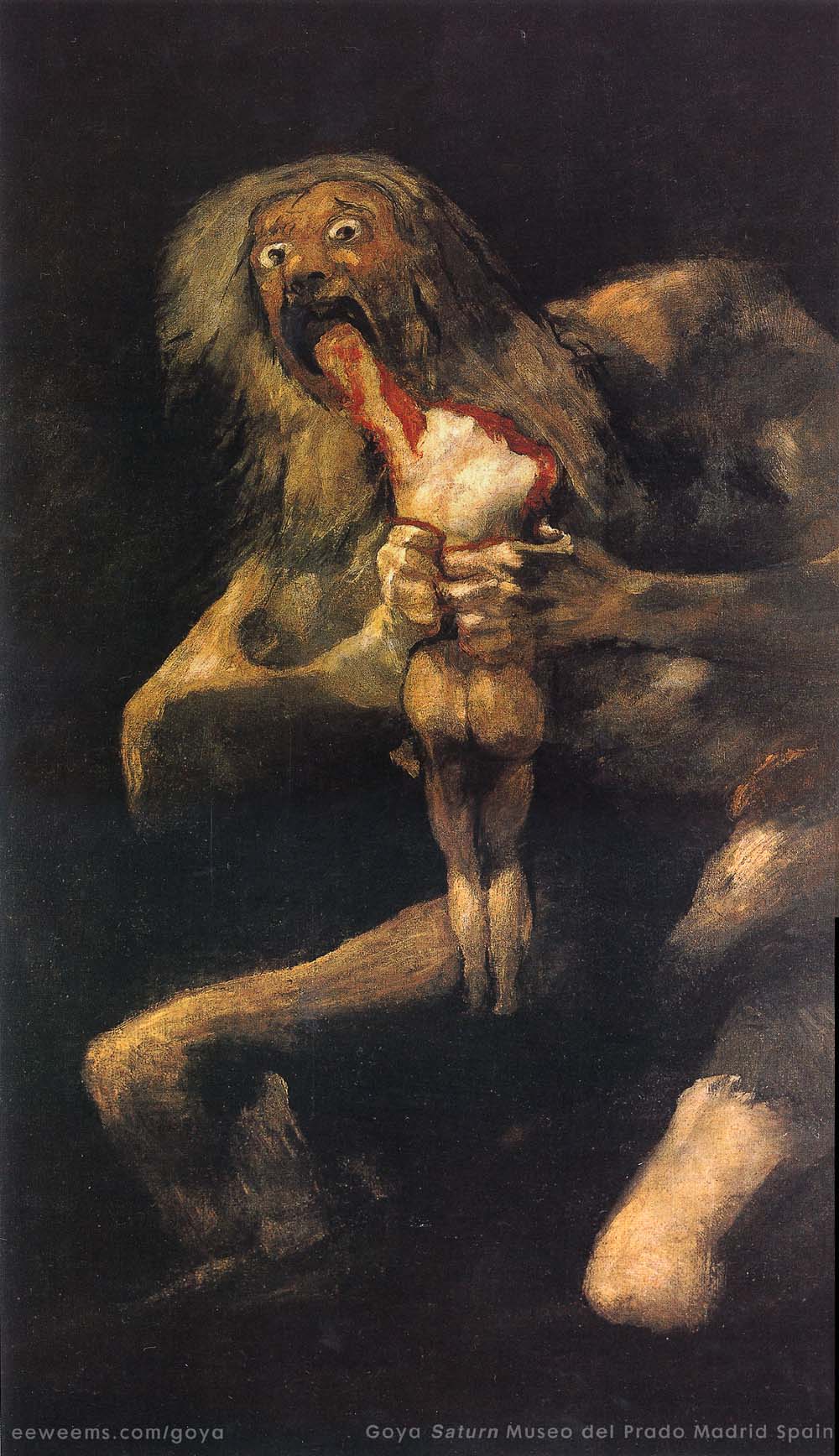
Goya's 'Saturn Devouring His Son' is one my personal favourite paintings (I'm actually painting it myself.. I only have the legs left but exams haven't let me finish it). I think this painting's composition is perfect: the contrast between the light and the dark and pretty much 'dirty' colours provides an alarming and sort of dream-like atmosphere, and the red of the blood although represented with just a few strokes, catches your eye immediately and completes the scene in a subtle and sublime and. However, I think that the most special feature of this painting is the look of Saturn; those eyes can make you have nightmares, and I can say is it really thrilling to paint them!... I think it is really obvious why this painting is consider to be a visual precursor to Expressionism.
I never imagined that early silent cinema could be so imaginative and have such astonishing visual effects (maybe they're not quite amazing comparing them to today's cinema, but considering that they are the first movies, they're just great).
Georges Melies's movie enchanted me. 'The Haunted Castle' is impressive and actually really funny and enjoyable to watch -that naughty Devil was delightful-. 'Voyage dans la lune' is for me a masterpiece: it is entertaining, funny, and sometimes ridiculous story that hypnotized me with his beautiful and pretty much unrealistic background sets.
When we saw impressionism in painting and literature I asked my dad if impressionism showed out in cinema too. Now that I saw that compilation of scenes of impressionist silent movies, I must say that I'm delighted by the delicacy of the photography and the creativity that was put into the screen with those movies; it is simply amazing and quite artistic.
Abel Gance's movies seem to be quite interesting for his innovative use of a lot of eye tricks, visual effects, and his genius photographic compositions. I would love to watch 'Napoleon' some of these days.