Showing posts with label postwar realism. Show all posts

Thursday, March 28, 2013

The Uncanny

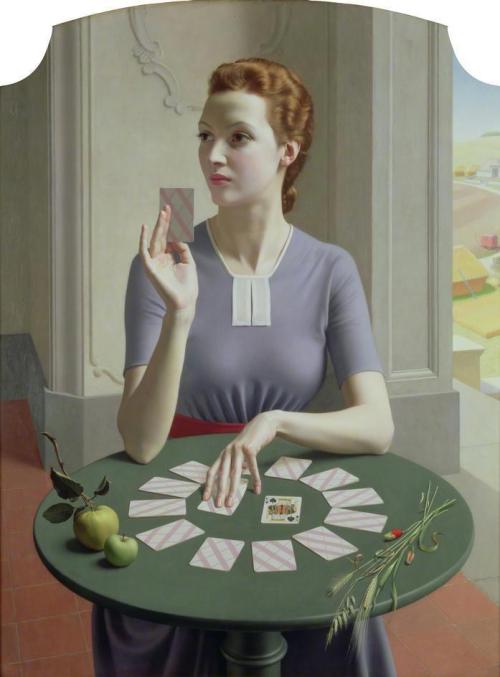
I guess that Uncanny paintings is something natural to happen after the war. Artists wanted to be Realist or even Hyper-realist, but sometimes that obsession for Realism turned actually pretty strange; familiar but strange; familiar but mysterious; familiar but too perfect to be actually real. I've always liked Uncanny paintings because even though they portray things pretty much as they are without any dream-like atmospheres and such, there's always a sort of  Surrealist feeling on them, and I love that!
This time, I think that Meredith Frampton got the trophy of uncanniness. Her paintings are certainly beautiful and breath-taking, but I guess she made life look way too perfect (something not quite realistic).


Wednesday, March 27, 2013

The Body Ugly

I just have on word for Body Ugly paintings: wow! These paintings surely are UGLY! If I was to choose what specie to be and I saw those paintings, I would never choose to be a human being. It's true that the human body can turn not that appealing to our own eyes, and well... I guess these painters don't want us to forget that fact. I would never but those paintings, and I don't get why someone will choose to paint that, but we can't ignore these painters had a great talent and well, of course, a real distinctive technique and style... really REALLY GROTESQUE.


Paperback Cover Illustrations

Paperback cover illustrations considered as art is something really interesting... I'd never thought of those images as actually art, but they totally are; just because they're not on a canvas in a museum, that doesn't mean is less valuable or more artificial. It's sad, of course, that these artists get most of the time unnoticed, forgotten and underrated. I think that it is really interesting when books feature this type of images on their covers because they can give you an idea of the plot and the atmosphere of the book you're going to read.

American and European Street Photographers

Street art is always criticized and somehow underrated, but I think that some of the best works of art come from street artists. Talking about photography, we could say that street photographers were more aesthetically concerned than the pure straight photographers even if they didn't use any effects or edition as well. However, I don't think there's much more difference between any of the photographers I've been discussing in Postwar Realism... Straight photographers also worked on the street and portrayed social and historical conditions and events involving people from all social classes, and even if they were more prepared and famous than the street artist, that doesn't mean their art is more valuable (the prices can differ from this idea, though).

Josef Sudek's


Robert Frank's from 'The Americans'

Nature Photographers

As nature allows photography to be perfectly straight, it also makes it automatically artistic and appealing to the eye. It may seem easier to make nature photos because they mainly consist on landscapes and still-life photographs that do not require movement manipulation, but I guess the difficult part is the time. For example, if you want to take a photograph of the day turning into the night, there's a small interval of time when that happens and you have to work quickly and adjust yourself to other things like the weather conditions (no sun can be tragic for some photographs)

War photographers

I think that war photographers should be admired not only because of their work (which is great: straight but artistic), but because of their courage... I would never go to a D-day just to take photographs even if I get a million of dollars. It's just crazy! Going to the locations after the battle passed would be depressing, but I'd rather go after the battle than actually being there when the action is happening just to take a bunch of photos! I guess that's something we can admire of these people apart from their work!
These war photographs seem to me more spontaneous and certainly more improvised than the other photojournalist photographers covering floods and the Empire State Building, and I guess that's because these war photographers had to keep moving in the field and there's not actual time to tell a solider to hold in one position to take a more controlled image... The results are great, though. *Hats off*

Photojournalists

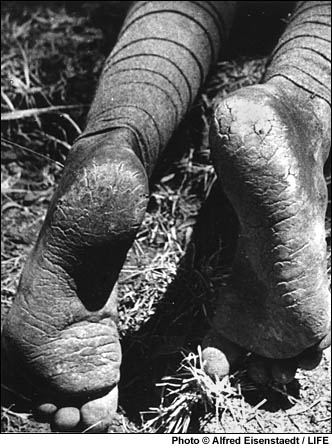
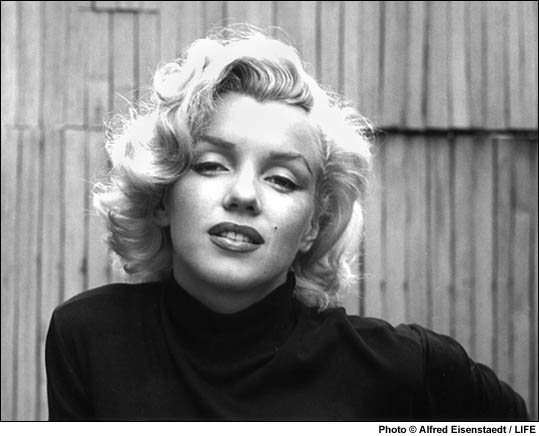
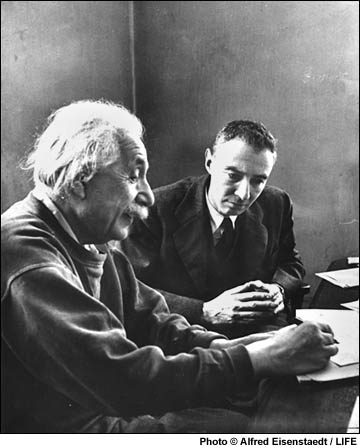
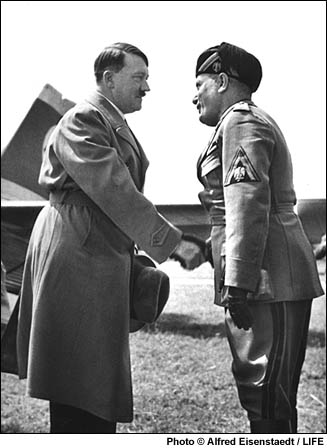
Even though photojournalists make a lot of documentary material that can also serve for sociological and historical purposes, I don't think they can be classified as pure straight or artistic photography; they don't seem to be using any manipulated compositions or effects, but their photographs are outstandingly beautiful. I have to acknowledge that even though I couldn't find anything wrong with any of the photojournalist artists, I just felt more touched by Eisenstaedt, Andreas Feininger, Werner Bischof and Gordon Parks. They all made, in my opinion, a great compilation of iconic images that can tell everything about the event or the person they're portraying in just one flash.


Add caption


Manuel Álvarez Bravo

Manuel Álvarez Bravo had some great remarkable photographs that cannot be missed... He certainly did not stick to either straight or artistic photography; he combined both styles and even got some bits of surrealism which I really really loved!

Straight and Documentary Photographers

Even though straight and documentary photographers don't manipulate photographic print and don't use artistic effects (soft focus, for example) for historical or sociological purposes rather than aesthetic ones, we can't deny they produce some great works of art! As I've mentioned before in this blog, straight photography  -and thus, documentary photography- always involves aesthetic decisions (what angle to use, what are you going to portray, the light you're going to use, the position of the people and objects on the photography, etc.), and the result is not less beautiful or more artificial than a Pictorialist photograph, for example. I prefer to describe this kind of photographs as a work of art with an historical or sociological plus that shows us some of the aspects of society that sometimes we all know, and other times we're missing.
I specially enjoyed Jacob Riis's, Lewis Hine's, Walker Evan's, Dorothea Langue's and Jack Delano's photographs.


Jacob Riis's 'A Black-and-Tan Dive in Africa'
Lewis Hine's 'Slavic Inmigrant'


Lewis Hine's from 'The Empire State Building series'

Walker Evan's 'Parked Car'


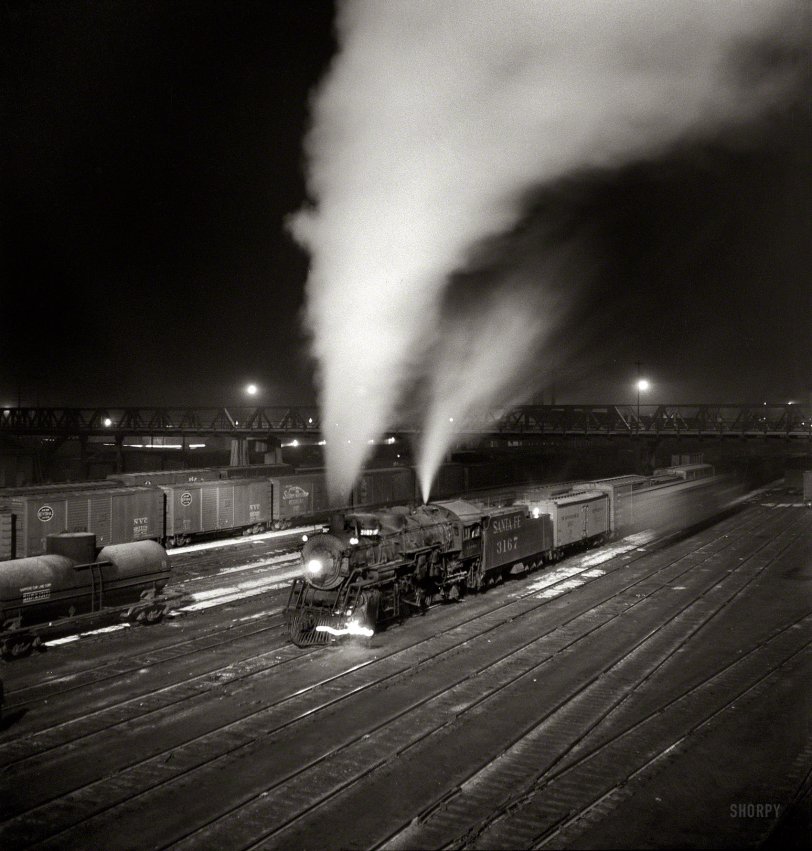
Jack Delano's 'Midnight Special'
Dorothea Langue's 'Migrant Woman',
a really famous one.

Monday, March 25, 2013

John Cheever's 'The Swimmer'

John Cheeve's perhaps most famous story 'The Swimmer' reminds me of James Joyce's 'The Dubliners', a bunch stories that portray everyday lives in Dublin but that don't allow the reader to be always sure about what is happening. 'The Swimmer' is just like that, you're given a discrete description of life in the middle and middle upper classes of American Society with what seems a charming story about a man who just decides to swim home, but as you're reading (and specially near the end of the story), you stop being so sure about the story... 'The Swimmer' is supposed to happen on a single afternoon, but sometimes it seems that the story looses any sense of time. Plus, it is said to be summer, but sometimes the weather behaves as if Neddy was in an autumn-winter afternoon. Moreover, he keeps wondering if his mind has suppress bad memories that make him suffer and he's hiding facts of his life to us! I mean, at first we could think he's a respected upper class man, a social man who's loved by his neighbors and friends, but then it happens that he's a poor broke man that has got little or none respect of his neighbors. Then, when Neddy finally arrives home he encounters an empty and rusty house without his girls and Lucinda in a sort of dream-like or even surrealist atmosphere that I'm sure thrills anyone that reads 'The Swimmer'. 
The society portrayed in 'The Swimmer' as I've mentioned a couple of times before is probably a society that just wants a break, a break from the war, a break from their problems, a break from everything that causes them pain... that's why they "drink too much", and they throw up big and unnecessary parties. It's a damaged America what we're seeing (even if they win, I'm pretty sure no one was really satisfied with the postwar period). 
I guess I'll never be sure about what happened to Neddy's life or how the story ends up making sense, but I just can say that I loved this story! It is certainly  and exemplary plot that leaves the reader thinking about it for a long time! *Hats off to John Cheever*

Mumblecore

I think Mumblecore films are the grandsons of Cinema Verite and all those postwar Realistic films. Mumblecore films also involve unprofessional teams and actors and they're shoot in a low-key style without expensive set ups, wardrobes and effects. It's an effective and interesting way for young filmmakers that can't afford Hollywood's budgets for expressing themselves, portraying life and entertain people! Who knows? Some of those amateurs Mumblecore filmmakers may become the next Woody Allen!

Cinema Verite

Cinema Verite films suggest that director just went with his camera to a family reunion and started to randomly record everyone's conversations from strange angles (I guess that's why there are a lot of mockumentaries about this). However, as in 'Mass Observation' project, the work done in Cinema Verite is much more than it seems; there's actually a control in the shooting of the scenes to make it look natural and fairly realistic. I think it would be a good challenge for an amateur filmmaker to make a Cinema Verite film!

Italian Neorealism, American Postwar Film, Shomin-geki and Satyajit Ray

I think that is natural that filmmakers all over the world wanted to portray reality before, during, and specially after the war, but at the same time, I think that is still more natural that people watching those films about life i their countries hated those films. As I've said before, people wanted a break and they expect that going to the cinema will help them doing that for at least an hour and a half; they didn't wanted to watch their miserable poor lives on the big screen. However, I think these films were necessary... someone need to express and show to the world what was happening, in these cases, in Italy, America, Japan and India.
It is really sad for me to see that even when a human being is capable of creating such beautiful and helpful things, at the same time, he can be so inhuman and destructive... that's war, that's postwar... we can't ignore it!
The Best Years of Our Lives is a film I saw by accident last summer (my mom and I just wanted to watch a short film and we pick this one from my father's shelf... it wasn't short at all, of course). I thought that the film was depressing (except for the rather optimistic ending)... but life in those days must have been really depressing for the soldiers trying to fit again in society. A great realistic masterpiece that must be seen by everyone at least once in their lifetime!

Pd. How contrasting is Japan, the arrogant massive killers of the WWII (one of the bunch, actually) produced some of the most humanistic and deep films of all.


Postwar American Realist Fiction

I think that it is cool that artists portrayed American society's imperfections (sometimes -more like a lot of times- Americans aren't as civilized as they say): smokers, drinkers, cheaters, and people living lifestyles they can't really afford are all over postwar American Realist fiction. I guess it is like reading or watching a film about the Caesar's families in Rome down in some American suburbs! Gossip everywhere! 
I guess this American society's behavior is a response to the wars they fought in.... they wanted a break! 

Mass Observation

The Mass Observation is certainly a HUGE and not so easy to make project that required the work a great bunch of artist. Recording everyday life isn't s easy as it may seem... it isn't just to go to a church and wait with a camera until people came out; it requires people to choose the right locations, time, moments, people, and situations to listen, write about or film.
I was especially charmed by Humphrey Jennings's film 'A Diary for Timothy'. It is really interesting how the narrator just start explaining serious things like war and life to a small baby that doesn't know anything about the world or himself. Besides, the photography and edition of the film is just perfect, it shows us precisely what we should be imaging with the narrator's words, and it just portrays perfectly the innocence and vulnerabilities of humans when we're as little as newborn baby.

Postwar British Poetry

W.H. Auden, Philip Larking and Dylan Thomas make up the scenario of Postwar British Poetry. Even though, their styles are fairly different from one another, they all have this same sense of British tradition that all the world recognizes (they're not that pompous, though), and, of course, they all portray in one or another way the feeling in Britain after the war while using a rather casual and chit chat-like language.

"Were all stars to disappear or die,
I should learn to look at an empty sky
And feel its total dark sublime,
Though this might take me a little time."
This stanza from a W.H. Auden's poem, for example, gives me the feeling of the emptiness and the dissatisfaction that people must have been feeling in those days, even if they won the war.

They fuck you up, your mum and dad.
They may not mean to, but they do.
They fill you with the faults they had
And add some extra, just for you.
But they were fucked up in their turn
By fools in old-style hats and coats,
Who half the time were soppy-stern
And half at one another’s throats.

I guess we could think this is a British kid that lived during the WWs talking... his parents fucked him up... and his grandparents fucked him and his parents! War causes damages that were inherited generation from generation... all those worries, resentments, fails, tears and fears that don't seem to disappear even when parents try to.

Dylan Thomas' poems don't make sense at a first glance, but they totally do, and I must say they're extremely passionate and beautiful. *Hats off*

The majesty and burning of the child's death.
I shall not murder
The mankind of her going with a grave truth
Nor blaspheme down the stations of the breath
With any further
Elegy of innocence and youth.