Showing posts with label symbolism. Show all posts

Tuesday, January 29, 2013

Symbolism in Eastern Europe: Endre Ady

I found Endre Ady's poems really thrilling. They certainly give a sort of obscure or mysterious atmosphere that I think fits perfectly not only with his poems, but with his personality; I think he wanted to transmit us  his tragic and problematic vision towards life and life's affairs. Ady's poems seem to me quite rhythmic and even catchy... they have this je ne sais quoi that make them so beautiful, beautifully dark, beautifully tragic, and beautifully attractive.
I think the first two verses of 'Life Terrifies Me' are just perfect and memorable:

"Holy ecstasy-swans on great glad Waters
Seize me, but in vain."

Imaginism's Precursor: Stephen Crane

Stephen Crane's poems are some great examples of pure poetry. While reading Crane's work, you can just feel his freedom, his freshness and his imagination throughout the lines of the poems, and he doesn't even need to use any intricate vocabulary or any complex syntax! Crane's poems are direct, short and effective. In spite of the short length and the plain language Crane uses, his poems are actually deep, and make some good philosophical, religious and cultural references. In fact, I think his are the poems that I have enjoyed the most during the whole course; they make me smile, they make me laugh, they are just unique.

My personal favourite untitled poems:

"Think as I think," said a man, 
"Or you are abominably wicked; 
You are a toad." 

And after I had thought of it, 
I said, "I will, then, be a toad."


___________________________

You tell me this is God? 
I tell you this is a printed list, 
A burning candle, and an ass.


___________________________

A man said to the universe: 
"Sir I exist!" 
"However," replied the universe, 
"The fact has not created in me 
A sense of obligation."


___________________________

I saw a man pursuing the horizon; 
Round and round they sped. 
I was disturbed at this; 
I accosted the man. 
"It is futile," I said, 
"You can never -- " 

"You lie," he cried, 
And ran on.

Paul Gauguin

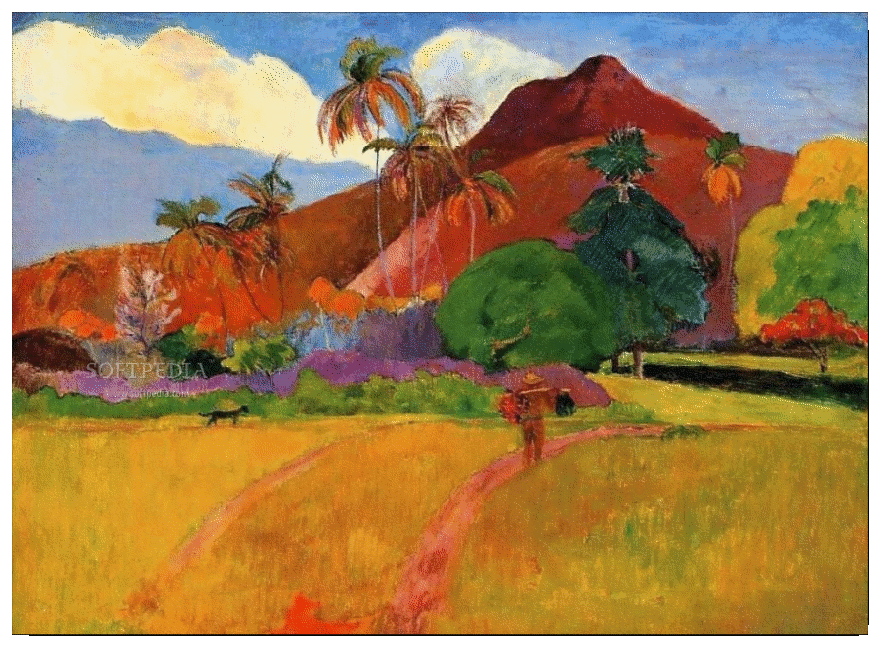
I think Paul Gauguin's work is attractive rather for its rareness than for being beautiful. In fact, I wouldn't consider his paintings pretty or beautiful, and I wouldn't like to paint them at all, but still I think they are great. I like how he can mix some sort of realistic elements with some abstract on the same canvas, and how he manages to obtain that abstraction from a strange mixture of colours. Paul Gauguin will never be my favourite painter, but he's certainly to look up to.

Gauguin's 'Tahitian landscape'

Pictorialist Photography: Britain, France and America

I've always liked and appreciated photography as a modern art form, but I never imagined early photographers could actually do the effects and compositions that we can look at in pictorialist photographs.


  • Pictorialism in Britain
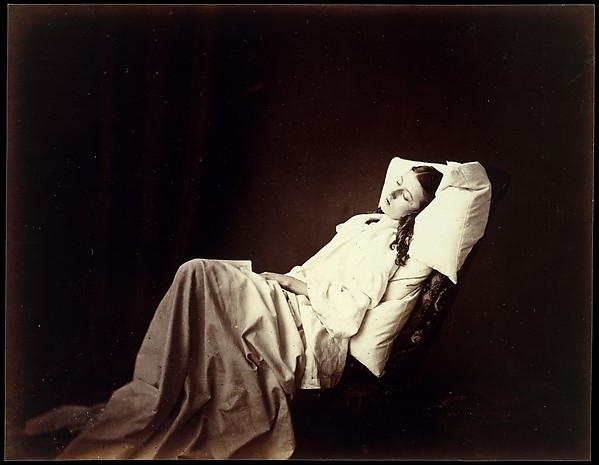
The two remarkable photographers of British pictorialism were Henry Peach Robinson and Peter Henry Emerson. Both artists' work impressed me; their photographs look almost like some painting sketches or some really detailed oil paintings. I liked these guys so much that I search more of their work and these are some of my favourites that I found.
Emerson's

Robinson's 'Figures in Landscape'
Robinson's 'She Never Told Her Love'
Emerson's
  • Pictorialism in France
In France, we can found another pair of great photographers: Constant Puyo and Robert Demachy. Both of them are marvellous in their style, but as Puyo's photographs portray more magical or Disney-like scenes (by the way, 'Montmartre' features some really nice effects in the background), Demachy's 'Struggle' is just out of the common idea we have of photography at that time, it really looks like an actual black and white oil painting! If I had to choose one photographer, I wouldn't know which one to pick.

Demachy's

  • Pictorialism in America

America had a bunch of pictorialist photographers, but I think that the most remarkable ones were Alfred Stieglitz, Edward Steichen and Gertrude Kasebier.
Stieglitz photographs portray pretty much common scenes in old, ugly, and contaminated cities, but the scenes still look quite romantic, sensitive and beautiful. I think that Stieglitz's photographs could be used as decoration in some novels of the Romanticism.

Stieglitz's 'A snapshot: Paris', my favourite
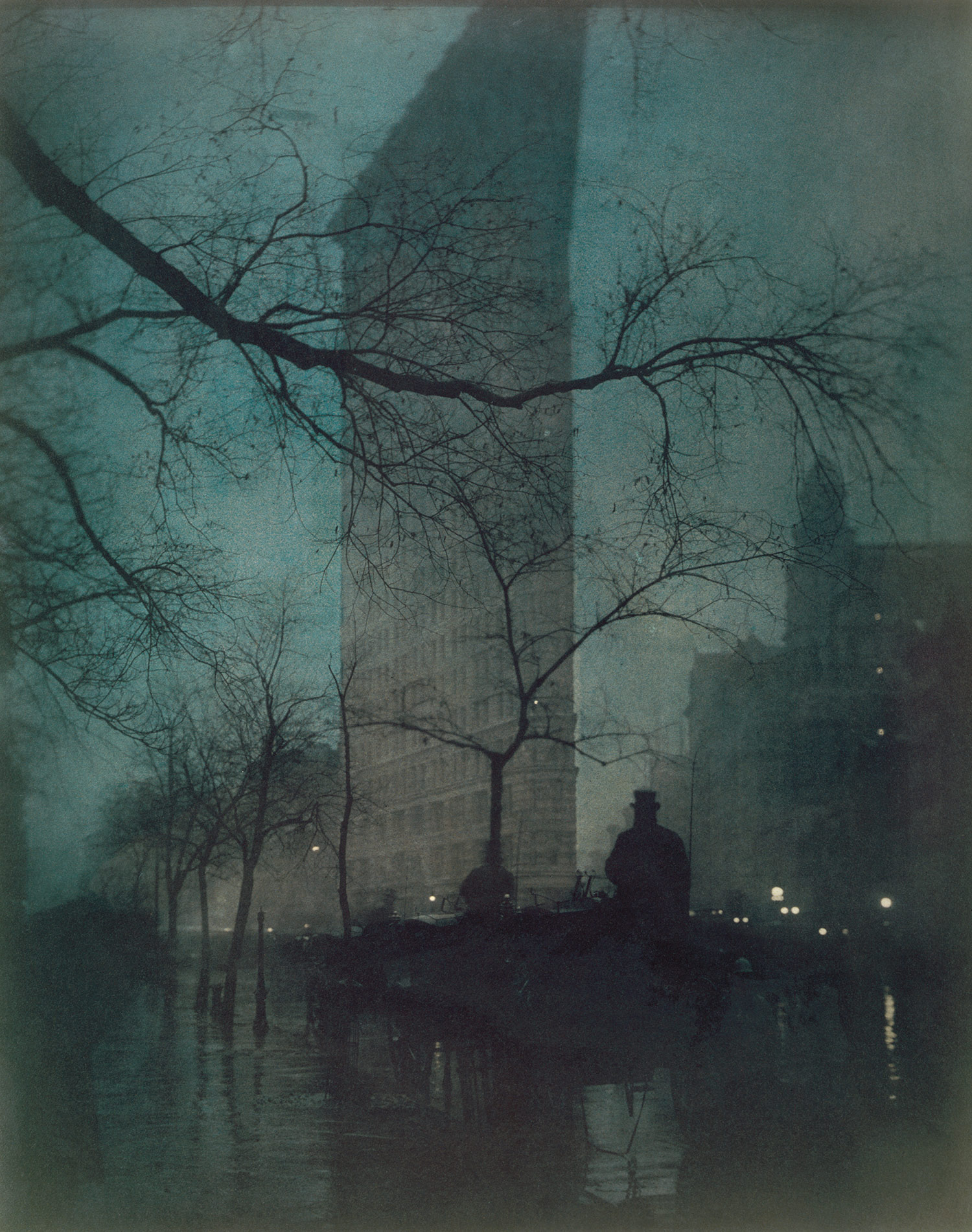
Steichen's photographs look indeed like some derivatives of the Luminist's paitings, and that nice use of light and darkness at the same time gives his photographs a different and unique touch.

Steichen's 'A Flatiron Building'
By the way, are those blues? How could he even  get that effects at that time?!
Kasebier's photgraphs seem to feature some effects that we could use now to manipulate images on PowerPoint or Word, and it seems to me quite amazing that she could obtain those effects at that time and make great work out of it.

Finally, here are some other American photographs I enjoyed a lot:

White's 'Raindrops'

Coburn's 'Spiderwebs'

Symbolism in Music: Arnold Schoenberg

Well, what can I say? Listening to Schoenberg's 'Pierrot Lunaire' was weird, not only for the rather strange arrangement and sound of the music, or the sprechstimme style that the vocalist used, but also for the German that always makes everything sound creepy -at least for me-. I think that if you're looking for a nice, enjoyable melody to chill and relax, you certainly will never think of listening 'Pierrot Lunaire'; the piece is aesthetically terrible, but somehow, I liked it. Actually, I don't know why I got this crazy idea that the lyrics , and even some elements of the music, could perfectly work for some of those odd German heavy metal bands -I wouldn't be surprised if I found a heavy metal cover!-.