Thursday, April 18, 2013

Black Mountain College

I read some of each author's poems. I found them really delightful... All Robert Creeley, Robert Duncan, Charles Olson and Denise Levertov have a distinctive and different style that stands out in a certain way, but personally, I think the poem I enjoyed the most were those written by Robert Duncan (an I'm not really a poetry reader).

"
1)
Drunk with love! now
I am poisond with love.
I have been subtly poisond. 
Who would have thought pain so enduring?
The saxophone, the beat, the moon:
if I could only drift
once more toward foolishness
my angel, my angel
where have you gone? my false angel!
How I long for even the betrayal of your arms.

2)
Take away love,
this is the food that has poisond me:
if I had died
two months ago it would have been good.
I had faith.
Now there is no good thing
untainted.

3)
against the idea of suicide:

This is not what I want
to die in such misery."
As I've said before I don't really like too much poetry, but I love when poems seem desperate and passionate, there's nothing better than that in poetry! (Besides Borges and some other Spanish poets, of course - I prefer poetry in Spanish, I think not even French can caught the beauty of poetry like the Spanish language-)

Stand-Up Comedy / Improv

I think stand-up Comedy is one of the greatest legacies of this time period, and again, stand up comedy is generally another form of social and/or political criticism that gets really close to the public. I think nowadays it is easier for the general public to remember a good stand-up comedian than a good painter, maybe because the interaction between a stand-up comedian and the public is much more direct and obvious than any relationship between the public and a painter or even a musician. 
For the public, stand-up comedy could be seen as a relaxing and entertaining escape from reality, bur really they're just facing it in a more subtle and funny way. We can laugh of our own miseries with these guys, it's great!

I think an early example of stand-up comedy is the famous routine 'Who's on first?' (one of my favorites, my dad (both a film critic and a huge baseball lover) and I laugh ourselves out with this:


I want to point out the similarity between Mort Sahl's explanation of politics and John Cleese's explanation against Extremism:

Pure gold

I also want to mention Louis C.K.'s T.V. series 'Louie' as an amazing legacy of stand-up comedy (only that in the T.V. format)


Angry Young Men / British New Wave

I've always thought that criticism is one of the huge and most important subject-matters in art, specially in the United States and England.... It's just great, either it is a serious critic work of art, a comedy or a satire! I love when artists try to be socially aware because that gives their work a special feeling, a sort of extra, that  is usually more approachable to the general public. I thin that 'Angry Young Men' and 'British New Wave'  are just the perfect example of that. It seems that people just loved these plays, TV shows and movies, and they easily got identified with them. That's why South Park and The Simpsons are now just a big hit!

Sunday, April 14, 2013

Abstract Sculpture

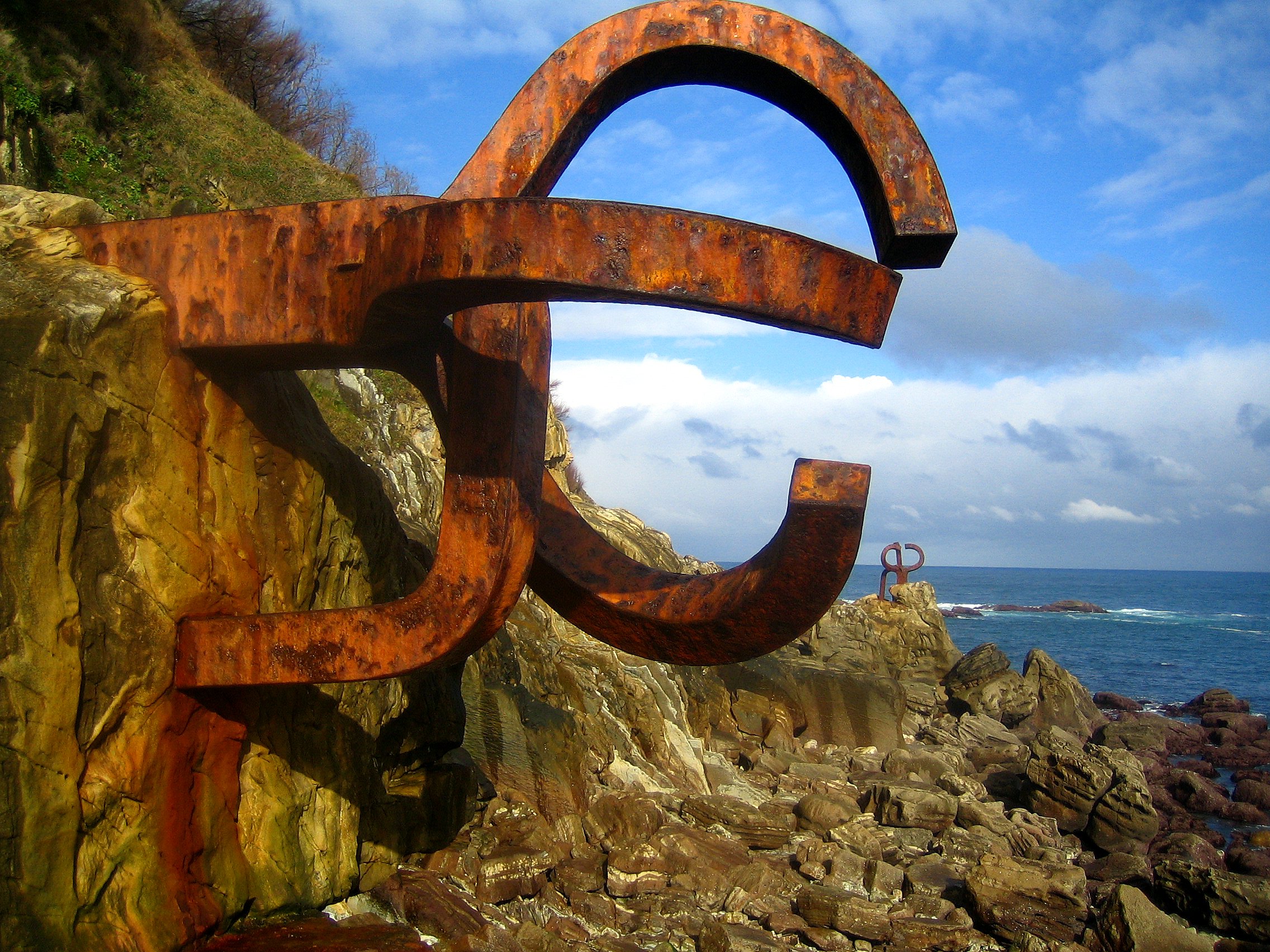
All I can say about Abstract Sculpture is that it seems so monumental to me! Even if they're tiny sculptures, they just seem so grand to me! They don't represent exactly any thing that we could recognize, but they can hypnotize us with no problem. I feel like I could lie in the sea just to watch the sculpture above! Abstract sculptures had made me remember that in spite of everything we do wrong, the human being is beautiful creature just for being able to create this kinds of things.

Color field painting, Post-painterly Abstraction, and Hard-Edge Painting

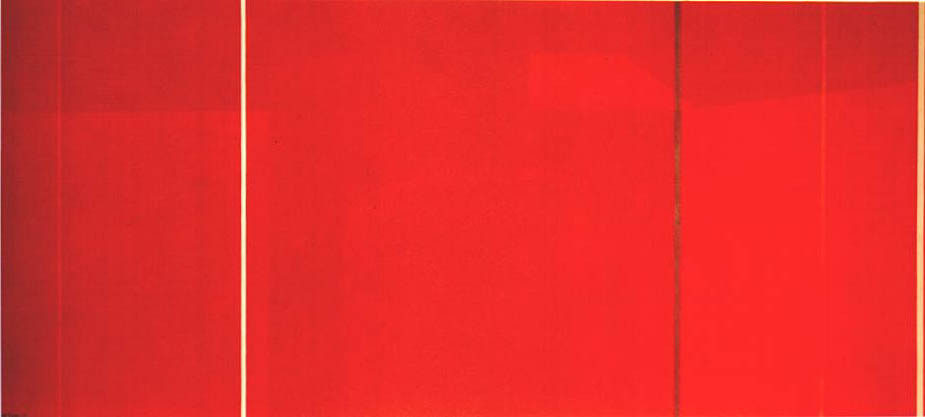
I wouldn't separate color field painting, post-painterly abstraction from abstract expressionism.... I think it's just stupid because all of those movements are abstract and expressionist. What's the point of separating them? If we take Mark Rothko's and Barnett Newman's 'floating rectangles' and 'zips', for example, we can easily see that they literary made color field paintings, but I think they're just as Expressionist as the finest Pollock's; color field painters throw us the same mystery and emotions with their canvases! Even an Ad Reinhardt painting hides something in his monochrome canvases, even an Yves Klein's blue canvas has something to say! (even if his paintings are just a blue canvas, we can't ignore the fact that he 'invented' his own blue, how about that?)


In the same way, I think Post-painterly Abstraction (silly name) is just as Expressionist as a Color field or an Abstract Expressionist canvas. It is true that Post-painterly canvas seem rather empty compared to a Pollock's or a Rothko's, but I don't think that makes them more superficial or meaningless. 


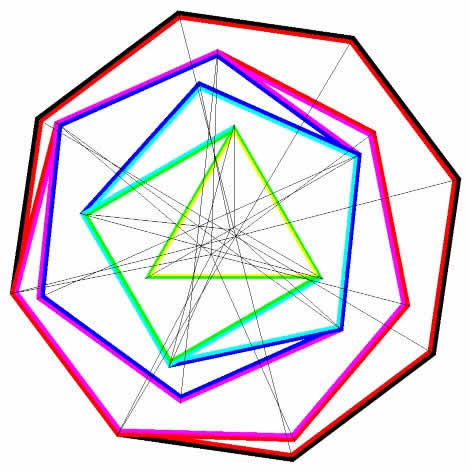
What I would accept to separate from Abstract Expressionism, Color field painting, and Post-Painterly abstraction is Hard-Edge painting... It is just not the same to see a free composition of biomorphic lines, curves and figures that a Hard-Edge strict painting! However, I think that Hard-Edge is just as important and REALLY influential nowadays; it may not be as obvious in painting or architectural mediums, but it IS in modern design. This is obvious, for example in the modern MWM Graphics (Matt W. Moore). I love them!


Concrete Art vs. Tachisme, Art Informel and Lyrical Abstraction

Geometric abstraction and Concrete art VS. Tachisme, Art informel and Lyrical Abstraction is, for me, just another cliche of art history: some people is painting in this way, and after a while, another group starts to paint in the opposite way. Art is an action-reaction thing. I couldn't possibly choose whether I prefer geometric or biomorphic abstraction because I really enjoy both styles with some exceptions, of course. We could say that geometric abstraction is more common today in design (like the MWM Graphics I've mentioned before), but biomorphic abstraction is still present in our furniture and design too, so I've decided to don't take a side and enjoy both styles.


VS.


Abstract Expressionism

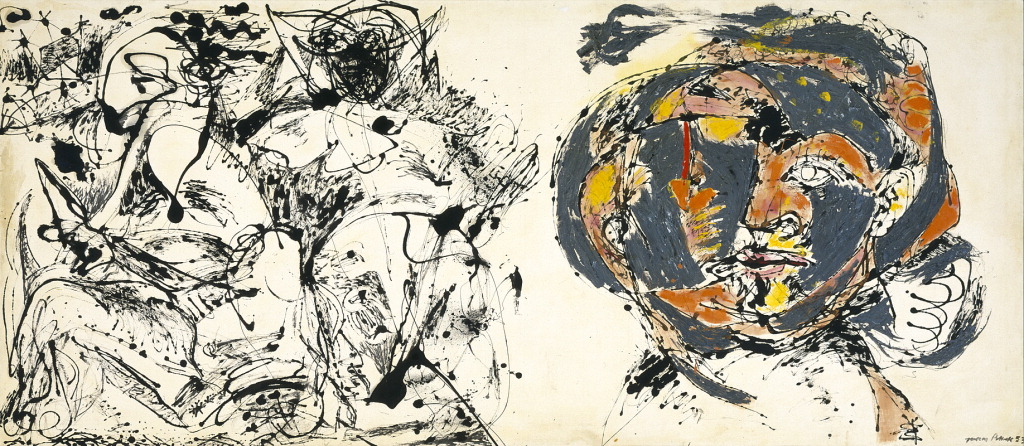
Abstract art is usually underestimate by the public; people think that Abstract Expressionism paintings are a sort of farce... "I can do that" they think... "My son made that in kinder garden" they say... "That's not art" they affirm. I think Abstract Expressionism is just the perfect movement to argue just the opposite. We could think that Jackson Pollock, for example, just spilled painting in a large canvas, but his paintings have actually a unity in both the 'lines' and the colors... It can be easily seen that he controlled the painting and maybe it is just me, but I can feel that Pollock had a kind of special relationship with his works.


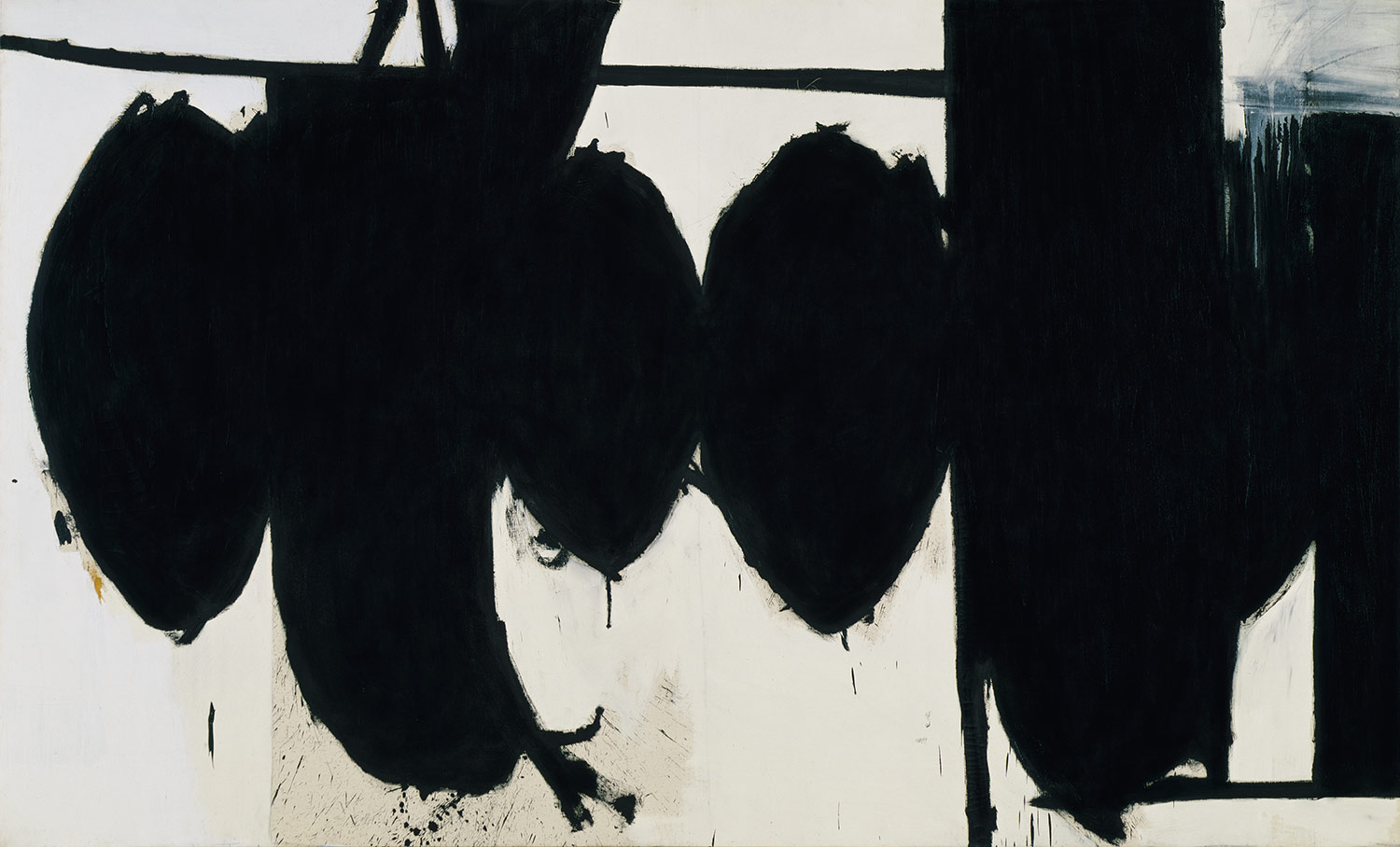
I could feel the same phenomena with other Abstract Expressionist painters like Willem de Kooning, Franz Kline and Robert Motherwell. They just seem so attached and related with their paintings! It's amazing and kind of special too... We couldn't find any painter-painting relationship in an old Venus painting from the Renaissance or even if we could find a relationship between the author and his/her work in Impressionism or surrealism, it wouldn't be as obvious as it is in Abstract Expressionism... I think this happens for the fact that we can actually see the work of the abstract Expressionist painters in the canvas (the shoulder movements of Pollock, for example).
Personally, I've always enjoyed abstract paintings that actually cause an emotion in the public, abstract paintings that seem to be telling you something, works that actually speak to you... I think Abstract Expressionist accomplished all that... *hats off*